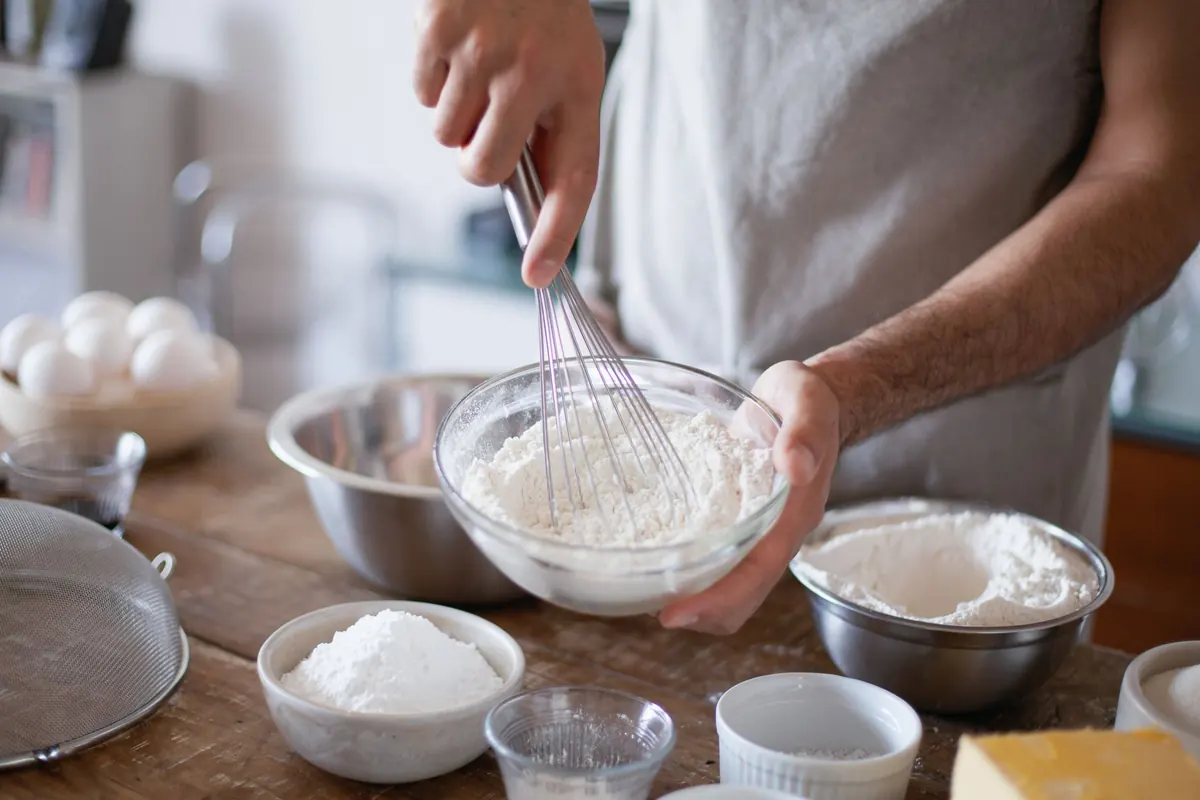
Two bags sit on the shelf. One says bread flour, the other all-purpose, and the recipe in your hand names one of them specifically. It is tempting to assume they are interchangeable, and often they nearly are — but the loaf that comes out of the oven will tell you which one you used. Protein changes how much water the dough drinks, how long it needs to be worked, how it rises, and how the finished crumb feels under your teeth. None of that makes bread flour the better flour. It makes it a different tool.
Here is how the two behave in yeast breads, and how to choose between them without overthinking dinner.
What Protein Does in a Loaf of Bread
Flour is mostly starch. The part that concerns us here is protein — specifically two proteins, glutenin and gliadin, which sit dormant in the flour until water and work bring them together. Knead or fold a hydrated dough and they link into gluten, a stretchy, gas-trapping network. That network holds the carbon dioxide your yeast produces and sets into structure in the oven.
The protein percentage on the bag tells you how much raw material is available. It does not tell you how much gluten you will actually build. A 13% flour that is under-kneaded and rushed through fermentation gives a tight, dense loaf; a 10.5% flour given enough time, a fold or two and a confident shape can produce a crumb with real openness. Protein content is a ceiling, not a promise.
What stronger flour really buys you is tolerance. Strong doughs survive a long, cold fermentation and a wet mix without collapsing. They also resist stretching, which is useful when you need tension and irritating when you are trying to roll out something soft.
Reading the Numbers on the Bag
Bread flour in most supermarkets is milled from hard wheat and lands around 12–13% protein. All-purpose sits lower, usually 10–11%, and is often a blend of hard and soft wheat. Two or three points sound trivial. In a dough they are not: they are the difference between a loaf that stands tall and one that spreads.
In Italy the bag tells a different story. The tipo number — 00, 0, 1, 2, integrale — describes how much of the grain was sifted out during milling, not how strong the flour is. A 00 can be delicate enough for pastry or strong enough for a long-rising pane. Manitoba is the exception most bakers know by name: a high-protein wheat flour, often 14–15%, that behaves closer to what an American baker would call bread flour.
So read the nutrition panel instead. Protein per 100g is effectively the percentage. Roughly: under 10g is pastry territory, 10–12g is all-purpose, 12.5g and up is bread flour, 14g+ is very strong. Brands vary, so the number on the back matters more than the name on the front.
Same Recipe, Two Flours: What Actually Changes
Take one formula — say 500g flour, 350g water, 10g salt, 5g instant yeast — and make it twice, once with each flour. The differences show up early.
In the mixing bowl
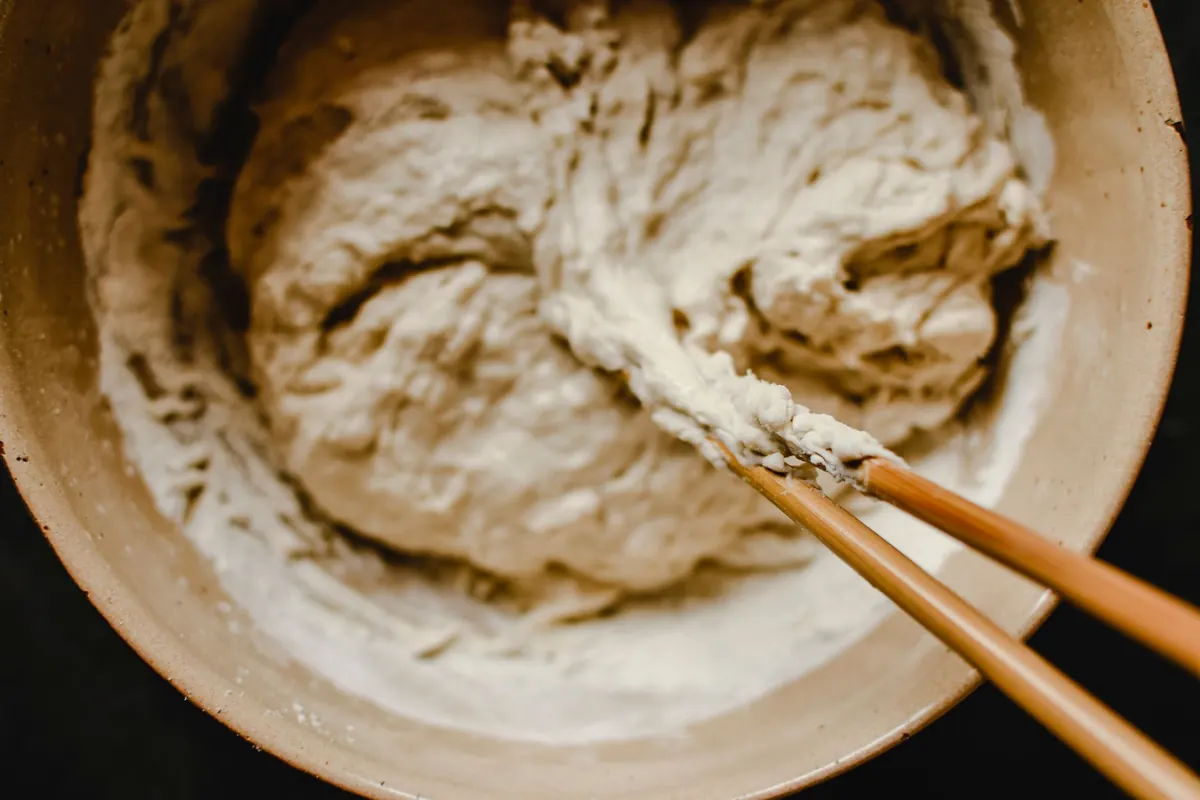
Bread flour absorbs more water. Give both doughs the same 350g and the bread-flour version feels stiffer and cleaner in the bowl, while the all-purpose dough feels slack and clingy. The stronger dough may want an extra splash; the weaker one may want a longer rest before it stops feeling sticky.
Through the rise
Strong flour takes longer to hydrate fully and needs more kneading or more folds to reach a supple, translucent windowpane. It also holds tension: after shaping, it may fight back when you stretch it into a long loaf. All-purpose relaxes sooner, which makes rolling and shaping easier but means it can lose definition during a long final proof.
On the plate
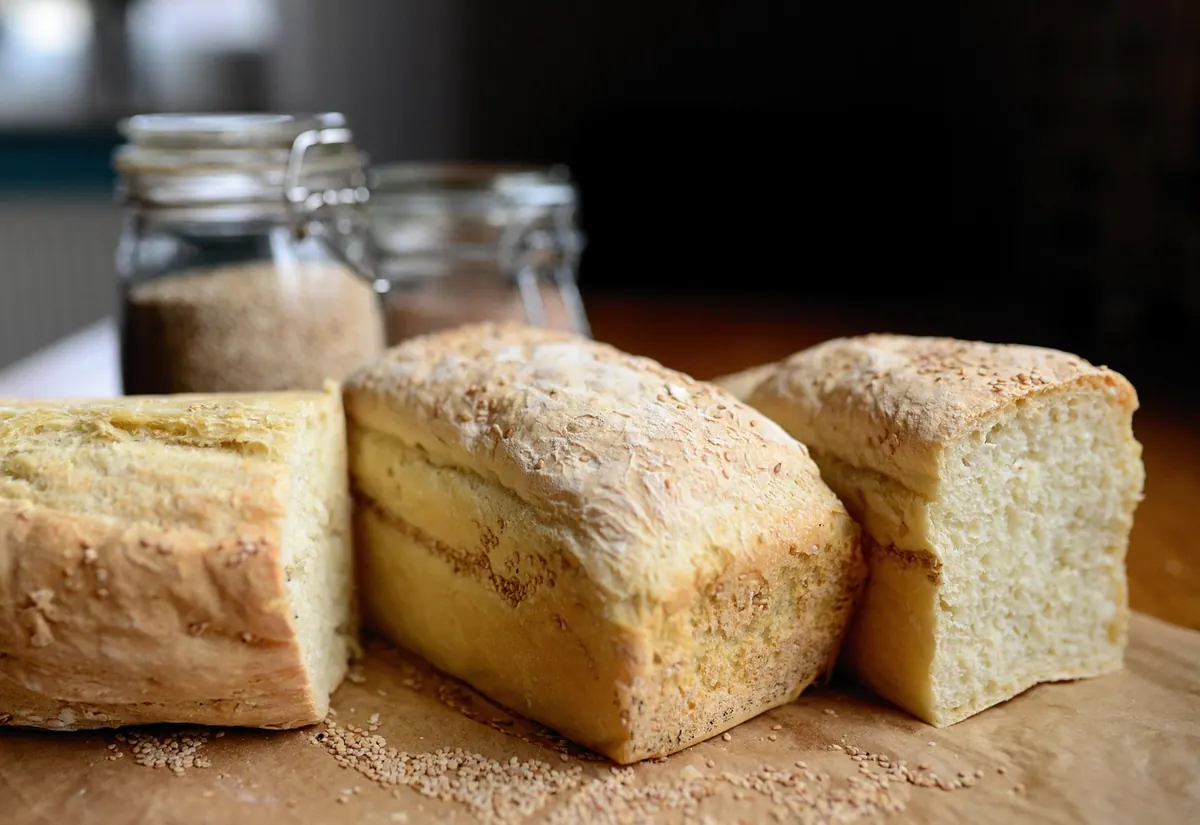
Bread flour leans chewy, with more oven spring and a more open, irregular crumb. All-purpose leans tender and even, with a softer crust and a slice that squishes nicely around a filling. Neither is a fault.
When All-Purpose Flour Is the Better Choice
Reach for all-purpose when the bread is meant to be soft. Enriched doughs — milk bread, buttery buns, sandwich loaves with egg and butter — benefit from a flour that stretches easily and does not turn rubbery. The same goes for focaccia you want tender rather than chewy, and for most flatbreads.
It is also the friendlier starting point if you are new to handling wet dough. Less protein means less elasticity and less snap-back, so shaping feels forgiving and the dough relaxes on the bench instead of wrestling you. If a recipe was written with all-purpose in mind, swapping in bread flour will change the texture more than you might expect.
One more case: quick same-day breads. When there is no long fermentation to build strength, extra protein adds little, and the dough can end up tight for its short life.
When Bread Flour Earns Its Place
Bread flour earns its keep when the loaf has to carry its own weight. High-hydration sourdough, free-form boules and batards, bagels, pizza dough with a two-day cold ferment — these need a network strong enough to hold gas and shape for hours. Strong flour also helps when you add whole grains, which dilute gluten and can make a dough slack and heavy; a portion of bread flour restores some structure.
A long cold retard is where the difference is easiest to feel. A dough made with all-purpose may look tired and spread out after eighteen hours in the fridge, while the bread-flour version comes out with tension still in it.
Strength is not a virtue in itself, though. Very strong flour in a soft roll recipe produces something closer to a chew toy than a bun. Match the flour to the bread you want.
Swapping One for the Other
Most recipes survive a swap. They just need a small adjustment in water and timing.
- All-purpose in place of bread flour: hold back a few tablespoons of the water, mix, and add it back only if the dough stays stiff after a ten-minute rest. Expect a slightly shorter window before the dough goes slack.
Photo: Los Muertos Crew / Pexels