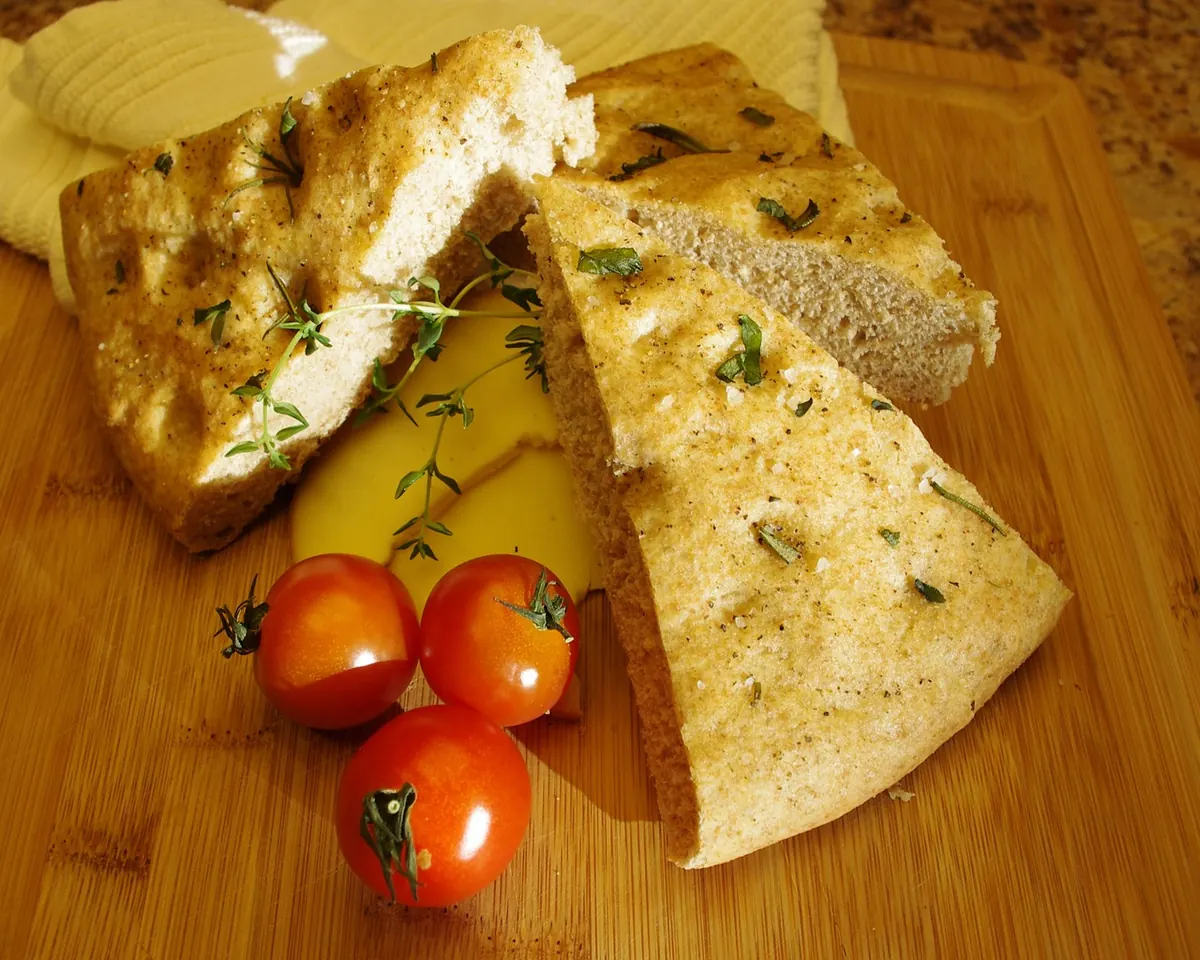
Focaccia is the friendliest bread in the oven. It asks for no levain, no banneton, no scoring blade, and it tolerates a distracted baker better than almost anything else made from flour and water. The dough is wet enough to be forgiving, the topping is olive oil, rosemary and flaky salt, and if you start before lunch you can be pulling warm squares out of the pan by late afternoon. This version is built for a first attempt: one bowl, a short ingredient list, and a timeline that tells you what to do and roughly when.
Why Same-Day Focaccia Is a Good Place to Start
Most beginner bread advice sends you toward a long, cold fermentation, which is excellent for flavour and terrible for someone who wants to know whether they can bake bread at all. Focaccia skips the hardest part of bread baking, which is shaping. There is no tight round to form, no seam to seal, no risk of a loaf collapsing sideways. You stretch the dough into an oiled pan, poke it with your fingers, and put it in the oven.
The high water content does the rest. A wet dough is slack, and slack dough spreads on its own, so the pan does the shaping for you. The oil underneath essentially fries the bottom crust while the oven bakes the top, which is why even a modest first attempt comes out with a crisp edge and a soft, airy middle. Rosemary and flaky salt are the classic finish because they are strong enough to stand up to good olive oil without competing with it.
What You Need for One Tray
This makes one generous tray, roughly 30 by 40 cm, or a 33 cm round pan if that is what you have. A gram scale is worth more here than any other tool; cup measurements for flour are too variable to be reliable.
- 500 g bread flour. All-purpose works too, with a slightly softer result. Avoid cake flour.
- 375 g lukewarm water. That is 75 percent hydration, which sounds alarming and behaves fine.
- 5 g instant yeast. About a teaspoon and a half. If you only have active dry, use 6 g and whisk it into the water first.
- 10 g fine sea salt. Roughly two level teaspoons.
- 30 g olive oil for the dough, plus another 30 to 40 g for the pan and finishing.
- 2 tablespoons fresh rosemary leaves, roughly chopped, plus a few whole sprigs if you like the look of them.
- 1 teaspoon flaky sea salt for the top. Maldon-style flakes, not fine salt, or the surface will be too salty.
You will also want a large mixing bowl, a spatula or dough scraper, and a metal baking pan. A dark pan browns faster, so check the base earlier if you use one.
The Timeline, Start to Finish
Total working time is about twenty minutes. The rest is waiting, which is why it helps to see the whole arc before you begin.
- 0:00 Mix flour, water and yeast into a shaggy mass. Cover and leave for 20 minutes.
- 0:20 Add the salt and 30 g olive oil; squeeze and fold until the dough comes together.
- 0:40 to 1:40 Three or four sets of folds, spaced about 20 minutes apart.
- 1:40 to 2:40 Cover and let rise until roughly doubled, about an hour in a warm kitchen.
- 2:40 Oil the pan, transfer the dough, stretch it gently toward the corners.
- 2:40 to 3:40 Second rise, 45 to 60 minutes, until it fills the pan and looks pillowy.
- 3:40 Dimple, top with rosemary, oil and flaky salt, and bake at 220°C (425°F) for 22 to 25 minutes.
- 4:10 Cool in the pan for 15 to 20 minutes before cutting.
Mixing, Folding and the First Rise
The initial mix
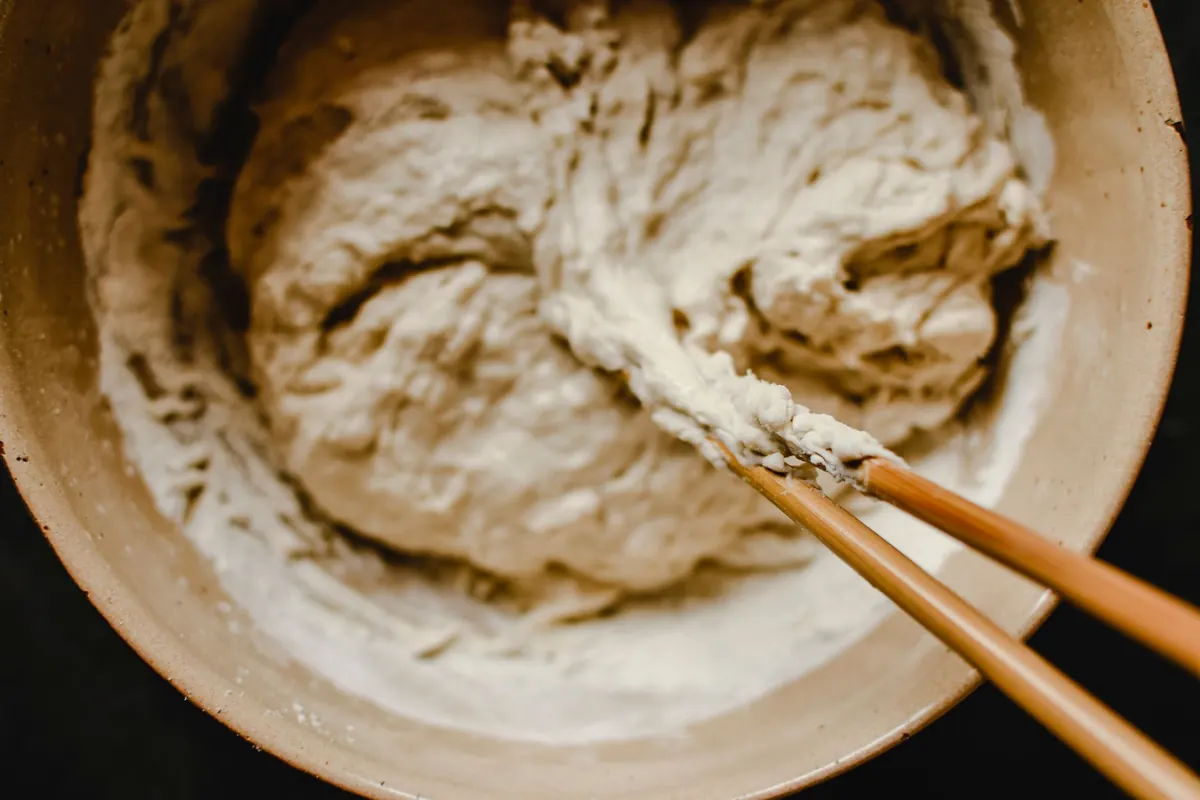
Stir the flour, water and yeast together with a spatula until no dry flour is left. It will look like a lumpy, uncooperative porridge. That is correct. Cover the bowl and walk away for 20 minutes; the flour hydrates and the gluten starts organising itself without any kneading from you.
Adding salt and fat
Sprinkle the salt over the dough, add the olive oil, and work it in by folding the dough over itself with a wet hand or a spatula. Squeeze through it a few times until the oil disappears. The dough will feel slippery at first, then smooth.
The folds
Every 20 minutes, wet your hand, lift one side of the dough, stretch it upward and fold it over the middle. Rotate the bowl and repeat four times, so you have folded all the way around. Three or four rounds is plenty. You are not kneading; you are building strength while the dough stays wet and slack. By the last round it should feel noticeably more elastic and hold a soft dome.
Then leave it alone. One hour in a warm kitchen usually gets it doubled. Judge the dough, not the clock: it should look alive, puffed, and full of visible bubbles around the sides of the bowl.
Pan, Dimple and Topping
Getting it into the pan
Pour a generous film of olive oil into the pan, two to three tablespoons, and spread it across the base and up the corners. Oil the spatula and let the dough slide out of the bowl in one piece. Fold the edges underneath if the dough is ragged, then press it gently outward with oiled fingertips. It will not reach the corners. Do not force it; it will spread during the second rise.
Dimpling and finishing
Once the dough has relaxed and filled the pan, oil your fingers and press straight down all over the surface, going nearly to the bottom of the pan. You want deep, deliberate dents, not a light pat. This is what stops the dough from ballooning into a flatbread and gives you the pools where olive oil collects. If the dough fights back and springs out of each hole, wait five minutes and continue.
Scatter the chopped rosemary over the top, drizzle with two tablespoons of olive oil so it pools in the dents, and finish with the flaky salt. Add whole sprigs if you want them for the look; pull them out before eating, since woody stems are unpleasant to bite into.
Baking and Cooling
Bake at 220°C (425°F) on a middle rack for 22 to 25 minutes. Focaccia is done when the top is a deep golden brown with darker spots on the rosemary and the underside sounds hollow when you lift a corner with a spatula. Pale focaccia tastes raw and boring; when in doubt, give it three more minutes.
Slide it out of the pan onto a rack, or leave it in the pan if the pan is heavy and the bottom is already crisp. Wait 15 to 20 minutes. Cutting hot focaccia steams the interior and gives you a gummy crumb, and the wait also lets the crust firm up.
If Something Goes Wrong
Dough not rising? It is almost always cold room temperature or old yeast. Move the bowl somewhere warmer and give it another 45 minutes. Dough sticking to the pan? More oil next time, right into the corners. Top browning before the middle is set? Loosely tent it with foil and lower the heat by 10 degrees. Crumb tight and cake-like? The second rise was too short; wait until the dough visibly fills the pan and wobbles.
How to Serve It and Keep It
Cut focaccia into squares or wide strips and eat it while it is still faintly warm, with nothing more than a bowl of good olive oil, or alongside soup, or split and filled with whatever is in the fridge. It keeps for two days in a paper bag at room temperature. After that, refresh it: a few minutes in a hot oven brings the crust back almost completely. Day-old pieces torn into chunks and toasted in olive oil make a better crouton than anything from a packet.
Once this tray works, the recipe becomes a template. Halve the rosemary and add halved cherry tomatoes pressed into the dimples. Swap the rosemary for thin slices of red onion that have sat in vinegar for ten minutes. Or leave it plain with salt and use it as a base for sandwiches. The dough does not change; only the top does, and that is exactly the kind of recipe worth keeping in rotation.
Photo: lisapadgett / Pixabay